Fumigation capacity scheduling: daily limits, holds and bookings
Manage fumigation bookings and holds against daily capacity, and understand how specialist scheduling differs from AI route optimization.
Last updated
Fumigation capacity scheduling is a different planning problem from optimizing a technician's recurring route. In Solea, capacity-based work uses a separate schedule with a daily slot limit. Staff place work on that board, and held slots count toward capacity alongside booked work.
The distinction matters when the office promises a date. A slot on a fumigation board and a gap on a technician's route do not represent the same resource. Use the board to manage the specialist work it represents, and evaluate route availability separately.
What does the fumigation capacity board control?
Solea capacity planning supports a daily capacity for a capacity-based schedule associated with a service type. The limit belongs to that schedule. It is not a universal maximum number of appointments per technician or an automatic calculation of how many jobs the whole company can deliver.
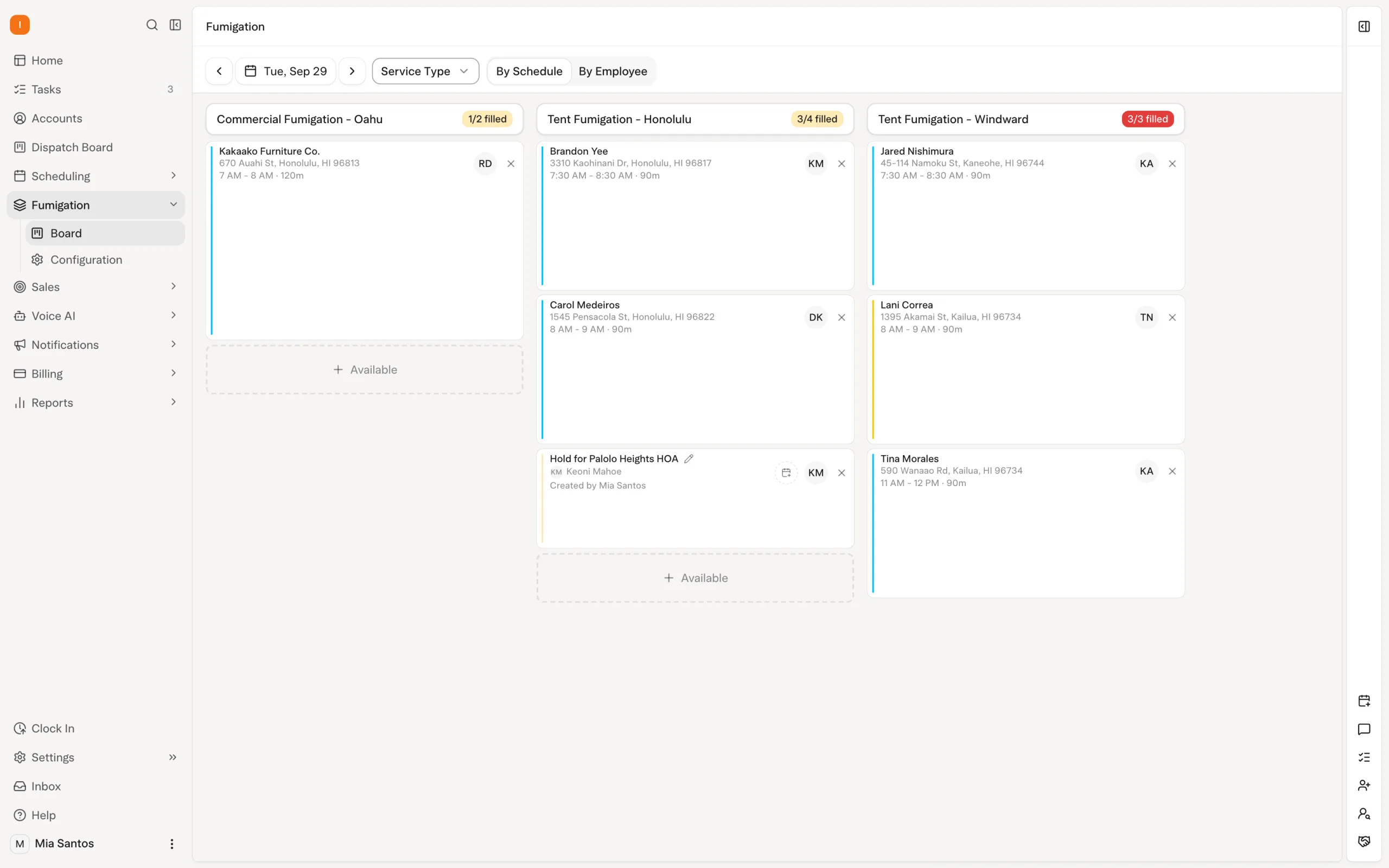
Start by agreeing what the schedule represents operationally and who maintains it. The number of slots should reflect the work your team can actually support. This is an office planning decision; the guide does not claim that Solea forecasts fumigation demand or chooses the daily capacity for you.
How should the office treat a held slot?
A hold consumes capacity. That makes it a commitment worth reviewing, even if the customer has not reached the same stage as a confirmed booking. Ignoring holds can lead the office to promise more work than the board has room for; leaving stale holds untouched can make usable capacity appear unavailable.
For example, imagine a fictional schedule with five daily slots, three booked jobs and one hold. Four slots are occupied on that schedule. The remaining slot is not proof that every staffing or service prerequisite for another job is satisfied; those still need to be checked.
| Board situation | Office decision |
|---|---|
| A customer needs a tentative date | Establish what a hold means and who will follow it up. |
| A held job is ready to proceed | Verify the next booking step and the service requirements. |
| A tentative job will not proceed | Review and resolve the hold so the board reflects the actual commitment. |
| All slots are occupied | Check the commitments before offering another date or changing capacity. |
This table is a recommended operating process. It does not claim automatic hold expiry, automatic release or a particular customer-notification trigger. Ask to see those actions in your configured workflow rather than infer them from the existence of a hold.
How does this differ from AI route optimization?
Solea's AI route optimization organizes eligible appointments around scheduling constraints. Capacity-based fumigation work is placed by staff on its separate board. The route optimizer does not automatically fill that board.
| Scheduling approach | What it organizes |
|---|---|
| AI route optimization | Eligible route appointments using configured technician and customer constraints. |
| Capacity-based schedule | Specialist work placed by staff against the schedule's daily slot capacity. |
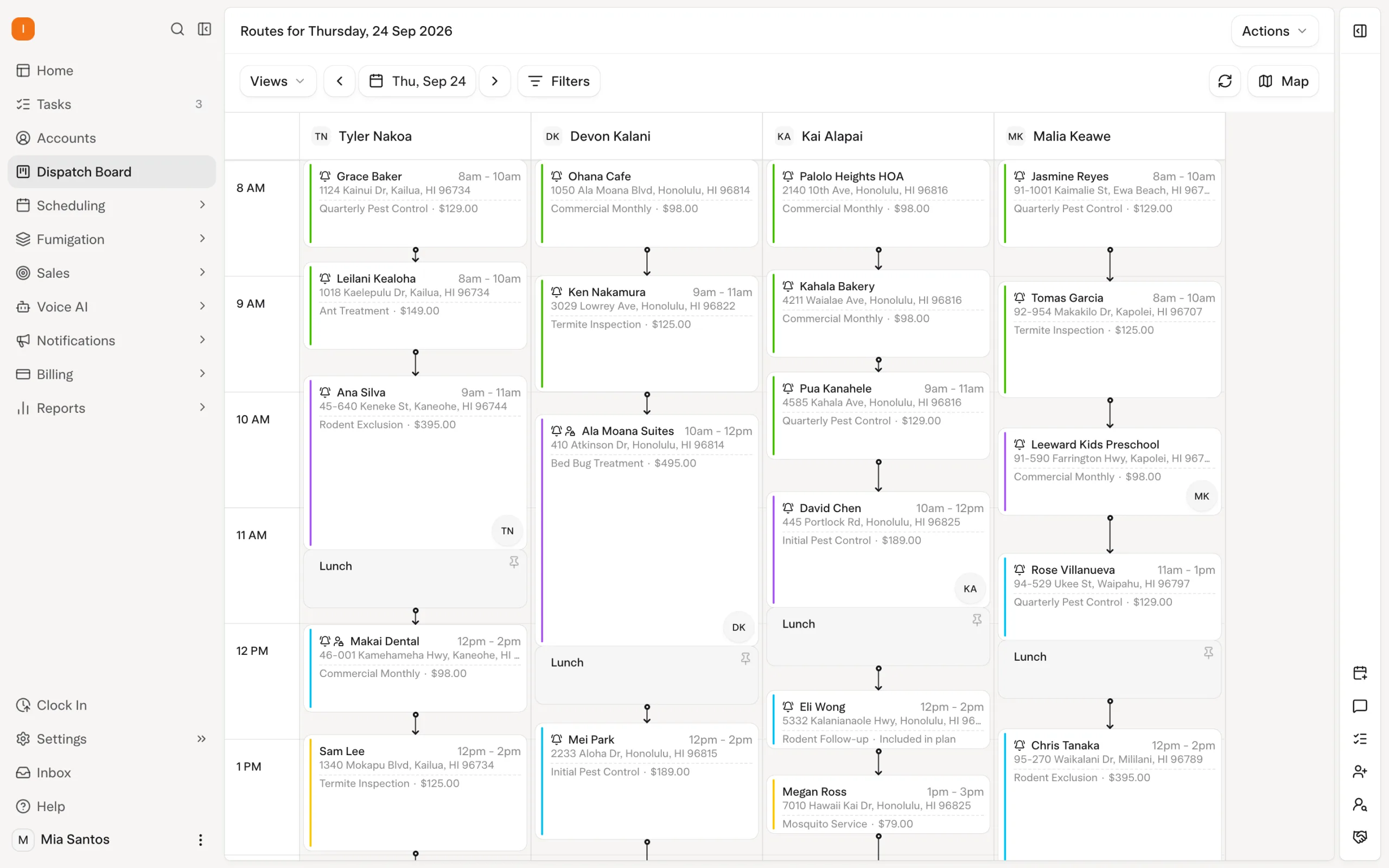
Solea's end-to-end AI-native approach connects the wider operation, including scheduling, payments, collections and AI-assisted reporting. It does not require labeling every specialist planning action as AI. Here, the office controls the capacity commitment while the platform keeps the work in the same operating environment.
For the broader route-planning evaluation, see the existing pest control FSM guide. This article focuses on the distinct capacity-board decision.
What should you check before promising a fumigation date?
Check the correct service schedule, the occupied slots including holds, and the operational prerequisites your team needs to deliver the job. Keep property context available so a booking decision is tied to the actual location and customer.
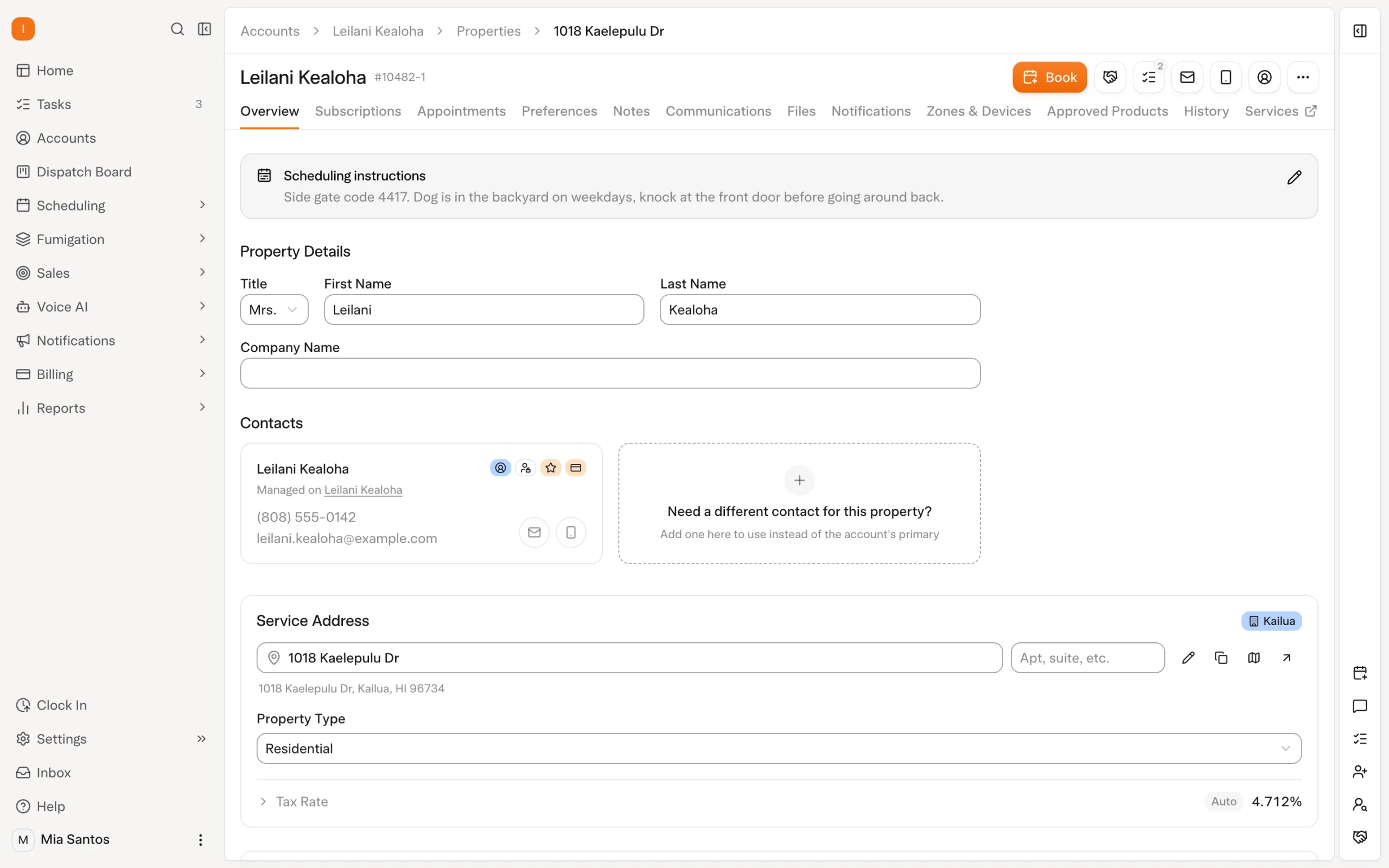
Solea customer management provides the account and property context around the work. The board answers a capacity question; it should not be treated as proof that every preparation, access or staffing requirement has been met. Your team defines the readiness checks relevant to its service.
What should a useful fumigation software demonstration show?
Use a small example with booked slots, a held slot and an additional customer requesting the same day. Have the team show how the daily capacity is configured, how work is placed, how holds affect the available space and how the office handles a changed commitment.
Then demonstrate technician assignment and the customer record for the job. Follow the applicable billing arrangement separately. A capacity booking is not evidence that payment has been collected; use the actual invoice and payment records when checking the financial outcome.
Finish by establishing who reviews unresolved holds. A short recurring review can help keep the board aligned with real commitments. That is an operating practice you can adopt, not a claim of a built-in automatic hold-cleanup feature.
Book a Solea demonstration around your specialist service schedule, or request a quote for your operation.
Frequently asked questions
- Does Solea automatically schedule fumigation work with AI?
- Capacity-based fumigation work is placed by staff on a separate capacity schedule. It is distinct from AI route optimization. Ask to see both workflows if your company operates recurring technician routes and specialist capacity-based services.
- Do held slots count toward daily capacity?
- Yes. Held slots count toward the capacity of the schedule. Review them alongside booked work before promising another date. Establish an office process for unresolved holds; this guide does not claim that they automatically expire or release themselves.
- Is the daily limit set per technician?
- The documented Capacity/Day limit belongs to the capacity schedule, rather than being a universal appointment limit per technician. Technician assignment is a separate part of organizing the work. Demonstrate the complete workflow for your service before treating the slot count as a staffing plan.
- Can an available slot guarantee that we can accept a job?
- No. An available slot describes space on the capacity schedule. Your team still needs to check the prerequisites for delivering the service, including the relevant property, access and staffing requirements. The board supports that decision; it does not establish every operational condition by itself.
- What should we compare when evaluating fumigation scheduling software?
- Compare daily capacity setup, held versus booked work, assignment, customer context and the process for changing commitments. Use the same example on each platform. Confirm how specialist capacity differs from normal route scheduling rather than assuming the phrase scheduling automation describes both.
 Overnight